Tuesday, 14 May 2013

Hello to me again!


“Sometimes the questions are complicated and the answers are simple.”
― Dr. Seuss


Today is a great day. I finally got my senses back. It feels like I had gone to live some other person's life and now I have come back to being myself. For one thing, I had got hold of my tablet again and have started going through my to-read list, which I have not been doing for last three or four weeks.

I think everybody has to pass through difficult times in life when things become too entangled and you cannot find the end of thread to grab and unravel the net. What I am talking about is probably not considered a great hardship but it was surely a tiring period.

I think I would prefer not to discuss the context here lest I should read it at some time in future and start to recall this previous month, which I want to forget with all my heart. May be I will write about it some time later but I certainly do not feel like going through the ordeal now. Let's just say that I overstretched my nerves a little too much by indulging in what seems like a twenty excessively demanding tasks and of course, simultaneously. Thing is that when you run many heavy processes on your computer, it gets heated up. Well, it looks like my head is not much different. But thank God, it did not get warm enough to explode, though it might have caused some nearby explosions or may be something dangerously close to that.

Ironically, all that remains to be done is my Final Year Project, which by the way is on one bumpy road, find a job and get admission in MS. Ha!! Still I am saying that I feel free. One good thing about difficulties that we face in life is that you stop complaining about frivolous problems and start learning to adjust with them. At the same time, you learn the immense value of blessings you already have and start cherishing and appreciating them better. I remembered a saying of our Prophet Mohammad (PBUH), that I find in perfect compliance with what I am feeling right now:

Hadees e Nabwi: " RASOOL ALLAH ( S.A.W.W.) ne 1 admi ko naseehat krte hue ye bat farmai" tum 5 cheezon ko 5 cheezon se qabl ghaneemat jano'
1: apni jawani ko burrhape se pehle
2: or apni sehat ko bemari se pehle
3: or apni khush'hali ko muhtaji(tangdasti) se pehle
4: or apni faraghat ko mashgooliat se pehle
5: or apni zindagi ko mot se pehle


So I am glad that I could at least comprehend some of my answers and that I shall be thankful to Allah for what I have.

Sunday, 7 April 2013

Humor at its Best


مشتاق احمد یوسفی کی کتاب 'چراغ تلے' سے کچھ اقتباسات

"ترقی یافتہ ممالک میں مارچ کا مہینہ بے حد بہار آفریں ہوتا ہے۔یہ وہ مہینہ ہے جس  میں سبزہ اوس کھا کھا کر ہرا ہوتا ہے اور ایک طرف دامنِ صحرا موتیوں  سے بھر جاتا ہے تو دوسری طرف "موجہ گُل سے چراغاں ہے گزر گاہِ خیال"
اس تمہید دل پذیر سے میرا یہ مطلب نہیں کہ اس کے بر عکس پسماندہ ممالک میں اس مست مہینے میں پت جھڑ ہوتا ہے اور "بجائے گل چمنوں میں کمر کمر ہے کھاد" توجہ صرف اس امر کی چرف دلانا چاہتا ہوں کہ بر صغیر میں یہ  فصلِ گل آبادی کے سب سے معصوم اور بے گناہ طبقے  کے لئے ایک نئے ذہنی کرب کا پیغام لاتی ہے' جس میں چار سال سے لے کر چوبیس سال کی عمر تک کے سبھی مبتلا نظر آتے ہیں۔ ہمارے ہاں یہ سالانہ امتحانوں کا موسم ہوتا ہے۔ خدا جا نے محکمہ تعلیم  نے اس زمانے میں امتحانات رکھنے میں کون سی ایسی مصلحت دیکھی ورنہ عاجز کی رائے میں اس ذہنی عذاب کے لئے  جنوری اور جون کے مہینے نہایت مناسب رہیں  گے۔ یہ اس لئے عرض کر رہا ہوں کہ  کلاسیکی ٹریجڈی کے لئے موسم انتہائی ضروری تصور کیا گیا ہے۔"

-----------------------------------------

"۔۔۔۔۔۔۔وہ نفسیات کے کسی  فارمولے کی گمراہ کن روشنی میں اس نتیجے پر پہنچ چکے تھے کہ مل کر بچھڑنے میں جو دکھ ہوتا ہے ' وہ ذرا دیر مل بیٹھنے کی وقتی خوشی سے سات گنا شدید اور دیر پا ہوتا ہے اور وہ بیٹھے بٹھائے اپنے دکھوں میں اضافہ کرنے کے حق میں نہیں تھے۔ سنا یہ ہے کہ وہ اپنے بعض دوستوں کو  محض اس بنا پر محبوب رکھتے ہیں کہ وہ ان سے پہلے مر چکے تھے اور از بسکہ ان سے ملاقات کا امکان  مستقبل قریب میں نظر نہیں آتا تھا لہذا ان کی یادوں کو حنوط کر کے انہوں نے اپنے دل کے ممی خانے میں بڑے قرینے سے سجا رکھا تھا۔"

----------------------------------------

(اس مضمون میں مشتاق احمد یوسفی نے کافی کے لئے اپنی نا پسندیدگی کا اظہار کیا ہے۔)
ایک صاحب نے مجھے لاجواب کرنے کی خاطر یہ دلیل پیش کی کہ  امریکہ میں تو کافی اس قدر عام ہے کہ جیل میں بھی پلائی جاتی ہے۔ عرض کیا کہ جب قیدی خود اس پر احتجاج نہیں کرتے تو ہمیں کیا پڑی کہ وکالت کریں۔ پاکستانی جیلوں میں بھی قیدیوں کے ساتھ یہ سلوک روا رکھا جائے تو انسدادِ جرائم میں کافی مدد ملے گی۔ پھر انہوں نے بتلایا کہ وہاں لاعلاج مریضوں کو بشاش رکھنے کی غرض سے کافی پلائی جاتی ہے۔ کافی کے سریع التاثیر ہونے میں کیا کلام ہے۔ میرا خیال ہے کہ دم نزع  حلق میں پانی چوانے کے بجائے کافی کے دو چار قطرے  ٹپکا دیئے جائیں تو مریض کا دم آسانی سے نکل جائے۔

--------------------------------------

ایمان کی بات یہ ہے کہ جھو ٹے الزام  کو سمجھدار آدمی نہایت اعتماد سے ہنس کر ٹال دیتا ہے مگر سچے الزام سے تن بدن میں آگ لگ جاتی ہے۔

-------------------------------------

سنا ہے کہ شا ئستہ آدمی کی یہ پہچان  ہے کہ اگر آپ اس سے کہیں کہ مجھے فلاں بیماری ہے تو وہ کوئی آزمودہ  دوا  نہ بتائے۔ شائستگی کا یہ سخت معیار صحیح تسلیم کر لیا جائے تو ہمارے ملک میں سوائے ڈاکٹروں کے کوئی اللہ کا بندہ  شائستہ کہلانے کا مستحق نہ نکلے۔

-------------------------------------

میرا یہ دعوی نہیں کہ ہنسنے سے سفید بال کالے ہو جاتے ہیں' اتنا ضرور ہے کہ پھر وہ اتنے بُرے معلوم نہیں ہوتے۔ 

Tuesday, 2 April 2013

I wandered lonely as a cloud.....

For some time now, I have been getting tired of myself ! Why I can never agree with literally anyone is becoming a source of increasing frustration. Even more worrisome is my excessively rare sociological illness that entails not volunteering my opinion in a discussion on any important subject unless I actually "know" about it, and scarcely any subject is fortunate (yes, that would be fortunate!) enough. I call it a rare illness because almost everybody else (with very, very few exceptions) seems to enjoy perfect health. Most do not show even the slightest symptoms. Many of them just think that they were born with a height of wisdom that, for no more reason than glorifying the world with their existence, gives them the authority to pass judgments on some very serious matters of social and moral importance. Those who are humble enough not to deem themselves to be great philosophers are intent on making as much fun of everything as they can manage with their hapless sense of humor. At other times, which is most of the time, there is never ending gossip to endure.

That said, I feel much lighter. 

----------------------------------------------

Lately, I have developed a queer habit of coming across articles and debates on feminism. The involuntary nature and frequency of this "coming across" is not what I would regard as particularly gratifying. I am not fond of the topic. Mainly because the writers of the articles and the debaters do not realize the implications of what they are saying. There is not even a single article that I can say is rationally thought of. They are mostly emotionally motivating (both for and against feminism) speeches, failing to integrate reason into them. Some get condescending, some angry, some feel personally attacked or insulted and others feel mystically glorified of their own accord. Well, to be reasonable, you have to be calm and objective and you need to leave room for the possibility that you might be wrong in your interpretations. As a matter of fact, I am not fond of the topic because I have experienced that the debates on this topic tend to go literally wild. So when I start this uninviting but impossible-to-ignore-anymore task of talking about feminism, I am leaving all the room on earth for disagreement with just one humble condition: think analytically before you argue.

As I said I do not volunteer to present my point of view on a matter of importance unless I have credible knowledge about it, so I will say only that I am certain about. 

Being against or in favor of a theory depends upon how that theory is interpreted. If we go by the dictionary, feminism means the advocacy of women's rights on the grounds of political, social, and economic equality to men or a doctrine that advocates equal rights for women. 

My first question: Why should women's rights be "equal to men"? Rights and duties are supposed to facilitate our lives, which necessitates that they should have a fair distribution among men and women; the distribution being based on how they spend their lives, what their needs are and what they can do best. Now let us ask ourselves: are men and women exactly similar in all these things? I don't think so!! I need not enlist all the differences. There are sufficient proven facts, surveys and researches available in the fields of medicine, psychology and sociology that can support my assertion. 
My point is that women's rights and duties should be defined for what women need and can take responsibility for. Their needs and abilities are different; not insignificant or inferior, but different from those of men. If two things are not similar in nature, it is illogical and unscientific to talk about their equality. 
Even if, by some argument, it could be proved that men and women ARE equal, then I would ask how that equality would benefit the society? Every single person's individuality defines his or her importance. If I am able to do everything with just as mush efficiency as everyone else can, then why would I tolerate anyone at all? What will motivate me to develop a lasting relationship? We live with others and stand by them so that we can collaborate with one another to achieve a common goal. If two people are exactly equal in their capabilities, their relationship will become competitive instead of collaborative. Competition has some occupational hazards: the two parties have ego clashes, they are prone to cheating and at the end of the day, there is a winner and so, there is also a loser. Accepting even an above average moral rank, I think it is extremely optimistic to expect both the winner and the loser to live together happily ever after. While it could be beneficial for two different entities, businesses for example, it cannot serve to keep two parties together as one entity with common goals. To keep the institution of family intact, which lays the foundation of social life, men and women need to collaborate. And as I said earlier, collaboration is motivated by complementary differences and is incentivized by some benefits anticipated from the other party that one cannot hope to achieve alone, while claiming equality fuels competition.

One thing that always eludes me is that why people are attracted to getting more rights; more rights come with more liabilities. Why they want to be answerable to larger number of duties and why overstretching oneself is such a desirous business is beyond my scope of comprehension.

My second objection is against the interpretation of "advocacy of women's rights". There is nothing wrong with the words as they are; the problem is that they are interpreted with an unwarranted exaggeration. In advocating for women's rights, people have an inclination for asking much more than their fair share of rights. What I have understood so far is that "women liberation movements" do not exactly ask for the acquisition of what rightfully belongs to the women, but they somehow try to create new rights for them. I am not an expert in history but what I have gathered from the literature from 19th century writers including Jane Austen, James Hilton and Bronte sisters is that those were the times when somewhat similar conditions existed in western countries and similar women liberation movements were being originated there. Where have these movements landed them? Are they more respected now? Do they still not face emotional turmoil? Are they not a victim of violence anymore? Do they make stronger families? Do they represent a stronger and more stable character? If somebody says that now they actively contribute in the business of their countries, I would say that they cannot contribute more than the women of our Pakistani villages, who do as much work in the farms as their men do and who actually are suffering the greatest violation of rights.
My point is that we should advocate for women's rights but for those women who are actually suffering. There is no success gained by tilting at the windmills; probably an illusion of success but nothing tangibly important.
I assert that the key to attain the required balance of rights and duties is education and law enforcement, not creating media circus.

I am not against women's rights; I totally accept the fact that there is a need to save them from violence and help them attain their basic rights. But should that entail abandoning of Hijab, breaking of marriages and driving them away from their home right into the midst of a self-created media hype? Because that is what our media is promoting in the name of feminism.

Speaking for myself, I would want to maintain my own identity. I would never want to step into another person's shoes and fool myself that I can walk with just as much grace.

Now there still remains a very important question: who, and on what grounds, would decide about the fair distribution of rights among men and women?
However hard a man tries, he can never know exactly what a woman needs. Even if he knows some women particularly well, there are no grounds for the assumption that he can understand all the women of the world. How then, will he devise some rules for the distribution of rights and duties? And will he be able to give his own interests an importance that is neither more nor less than fair for himself and for every other man in the world !!.. Same goes for a woman as well. So there should be someone who knows literally everybody inside out: our Creator. Our best option is to believe that the system Allah Almighty has devised for us, is the system of an ideal society. So instead of trying to create new theories, we should, I am saying it yet again, educate our masses about the best existing way of life and our rulers should enforce the laws given to us by Allah Almighty.


Finally,what I think feminist motto should be: Now it is unfortunately true that women are suffering injustices in our society, which calls for steps to be taken for the restoration of their respectable and rightful status. I think it would be more logical and practical to say that women's basic rights should be deemed equally important, not exactly equal. I sense that it is getting confusing. What I want to say is that the matter should be looked into in detail from every perspective and feminism should be redefined in a more logically satisfying way, along with and in consent with the targets that need to be achieved, in a well-defined order of priority.

For those who just think feminism is just being proud and thankful to be a woman, I have absolutely no objection.

----------------------------------------------

Actually I had may different things on my mind when I started writing this blog post. Feminism was just one of them. But now I realize that I have already spent quite a lot of time here. It was more challenging and interesting to write on a general subject than reviewing a book that I usually do here. I hope someday we will be able to figure out a little about this enigma called life and find a way to make it worthwhile.

Thursday, 28 March 2013

A New Beginning

Despite being a far-from-literary-genius myself, I have the audacity to judge writers and sentence them to abandonment. I am hardly certain about how many people would agree with me in this, but based on what I have experienced, I have developed a habit of averting myself from writers who write too much (and marry too many times). Waiting or expecting is a laborious assignment; just as absence makes the heart grow fonder, anticipation makes it grow more desirous and more demanding because, having waited for it, we assume a right of being presented with the best work ever. I have certain (well-deserved) regard for writers who take their time researching for a book or may be just writing it with complete focus. And as I said, I am not a great fan of those who just feel a compulsion to produce greater mass of printed paper than everybody else. It is not because their books are always not good; but they are just good, not memorable and not much valuable; goodness and value are two different things. Perhaps this would more concisely explain all my ramblings:

گاہے گاہے کی ملاقات ہی اچھی ہے  امیرؔ

قدر  کھو  دیتا  ہے  ہر  روز   کا   آنا   جانا !


So, why I am suddenly taking the trouble to go philosophical? As it happened, the first news my laptop brought as I opened it today was that Khaled Hosseini's next book, And The Mountains Echoed, is scheduled to be published on May 21st this year, six years after the launch of his previous book A Thousand Splendid Suns. Khaled Hosseini is one of the most-read writers and a great many people who have read his books, The Kite runner and A Thousand Splendid Suns, are admirers of his superb story-telling. I think The Kite Runner is the one which is commonly read and highly rated by most of my friends on Goodreads. These two books are among some of the most memorable ones. But up till now, reading Khaled Hosseini's books has been a rare feat; there are just two of them; which had to be taken slowly and savored. Now, we have something to anticipate! 


For better or worse (you are free to choose your own philosophy) May 21st is still 53 days ahead! which means, for me, it is a new beginning; a beginning of expectation, waiting and recollecting (of Hosseini's previous books). No need to tell how much I hope that it will be just as good as the others, if not better.


Happy Reading to all (me inclusive) !!

Sunday, 24 March 2013

My Introduction to the The Great Literary Genius

Since my very first ventures into the realm of Urdu literature, I have somehow nurtured an anxiety about Ashfaq Ahmed's writing. I have always been told that at the end of the story, I would feel lost, not getting what exactly he wanted to say. A few days ago, I read an excerpt from Zavia that did not seem to be that beyond my scope of comprehension. So I thought I should finally give it a try.

This book "Aik Zakhm Aur Sahi" is a collection of small anecdotes. Every one of them has a complete philosophy behind it. Mostly, (I think) that he has tried to demonstrate how the very same things and events look when seen from different perspective, by different people or at different times and situations."Irony of Life" could be a fitting title for this piece of work. 
3/5 stars! 

Here is an excerpt:


اجالوں کا کرب
                                  
وہ بہت غریب تھا لیکن ایک دن اس کی قسمت کا ستارہ چمکا اور اسے لاٹری مل گئی۔ دو لاکھ روپیہ ہاتھ آیا تو اس نے اپنے اور گھر کے افراد سے متعلق سوچنا شروع کیا۔ ہزاروں خواہشوں نے سر اٹھایا اور پھر ان ڈھیر ساری خواشوں کےدرمیان اس نے محسوس کیا کہ وہ تو اب پہلے سے بھی زیادہ غریب ہو گیا ہے!!۔

So why 3 stars? I like it, no doubt. Not many people can master the art of putting so much between the lines. But I think the anecdotes were mostly depressing, mostly highlighting the wrongs, the double-standards and the deceitful nature of people and the misery they have to endure. They were half page stories, so there was no character development and therefore no justification for their behavior. I believe that our world has its share of both the right and the wrong and so when talking about life in general, there should be a sense of proportion. Bringing only one side of the story to the foreground is unwarranted.

And frankly, there were a few which I don't think I quite understood.

Saturday, 23 March 2013

"Survival on Earth is a surprisingly tricky business.” (Bill Bryson)


The moment I started reading it, I have been thinking why I never read Bill Bryson's work before! I am reading it rather slowly because there is so much in it. But even before reading half of it, I know that I am going to read it again.

About the book:

At some point in life, the idea fascinates us all:

“Everything in the universe has a rhythm, everything dances. ” (Maya Angelou)

But how? How it was created and how has it continued to exist in the way it does so? Most of us "normal" people have more pressing issues to reflect on.Well one day, the very same godforsaken idea was fortunate enough to find its way into the inquisitive and adventurous mind of Bill Bryson, so now he tells the story of how this question motivated mankind and what it yielded !

It is a story of the history of man's quest for knowledge about the universe and the extra-ordinary discoveries he made over the course of existence. As far as I have read it up till now, it is about the revelation about cosmology and basic physical sciences. No,no, it is not written by an obnoxious scientist, boasting about his work in nasty, hard-to-pronounce, encrypted words and taunting all the other scientists who were fatuous enough to think that they could share his own research interest. Bill Bryson is no scientist! The uniqueness of this book is that the writer treats scientists/researchers as human beings, not just documenting what they found out or invented, but he narrates their accomplishments (or blunders) in the backdrop of circumstances they were living in, their nature and habits and the obstacles they faced. No, just hang on. he does not tell all that in the notorious dry, boring tone of historical volumes, rather he ... oh I don't know yet how to describe it best. Probably like grandfathers usually speak when they tell really fascinating tales to their little grand-children, who cannot really grasp the solemness of what is being told to them. He knows how to keep non-scientists engaged in listening to indeed very sophisticated concepts of science. Let's just say that he tells in a way that you want to hear more.

Some of my favorite quotes, to give a taste of the tone of the book, rather than the scientific and historical facts it tells:

"For the next many years (we hope) these tiny particles will uncomplainingly engage in all the billions of deft, cooperative efforts necessary to keep you intact and let you experience the supremely agreeable but generally under-appreciated state known as existence. Why atoms take this trouble is a bit of a puzzle. Being you is not a gratifying experience at the atomic level."
"So thank goodness for atoms. But the fact that you have atoms and that they assemble in such a willing manner is only part of what got you here. To be here now, alive in the twenty-first century and smart enough to know it, you also had to be the beneficiary of an extraordinary string of biological good fortune. Survival on Earth is a surprisingly tricky business."
"What is extraordinary from our point of view is how well it turned out for us. If the universe had formed just a tiny bit differently—if gravity were fractionally stronger or weaker, if the expansion had proceeded just a little more slowly or swiftly—then there might never have been stable elements to make you and me and the ground we stand on. Had gravity been a trifle stronger, the universe itself might have collapsed like a badly erected tent, without precisely the right values to give it the right dimensions and density and component parts. Had it been weaker, however, nothing would have coalesced. The universe would have remained forever a dull, scattered void."

Friday, 15 March 2013

"Love conquers all things except poverty and toothache." ( Mae West)

Sadly, I am no dentist, so I have no authority on anything that affects toothache. But I read something that deals extensively with love and poverty and their terribly conflicting relationship and a lot of other very important things and toothache is the maximum amount of humor (if it qualifies) that I can manage with the subject at hand. It is called "Man o Salwa" written by Umera Ahmed. 


A Review of Man-o-Salwa by Umera Ahmed:

It was a very long and complicated story. In my opinion it was more complicated that it could be. It was a great novel in many aspects but it has some flaws as well. No, just hang on, I love it, but you should not overlook the flaws, even if they are minor. It is one of the lessons the story has to offer.

First, as I said it was unnecessarily complicated and dramatic. Secondly, the characters acted unnaturally and obtusely. Thirdly, I don't think it was an instance of Umera Ahmed's best pieces of writing. Her style of writing is much better in Amarbail, Peer-e-Kamil and some of her other short stories. I cannot classify it as a good or a bad quality that all the characters and situations were representing various types of extremes while neglecting the grey areas.

I am finding it very difficult to review this book because I liked it despite the flaws and the things I liked are fairly hard to be put into words. Also it is about some very serious social problems, so I cannot describe it casually.

It is a story of the curses of poverty and the path of sin it leads to but at the same time it is also a portrayal of the strength of character with which one can steer away from this path to that of the purity of soul. Zainab, Shiraz, Karam Ali and Zarri having born in almost similar families with regard to financial status, come to lead very different lives, all by virtue of their choices, most of which were emotion-driven.

The most conflicted character was Zainab, who was at one time the most obedient, loving and caring and religious daughter of a pious man who had always stuck to Rizq-e-Halal despite the temptations of bribes he had as a clerk in income tax department. Zainab has always lived under the shelter of her father's love and was engaged to the man she loved. One flaw in her personality was that she was emotional to the point of foolishness. She loved Shiraz with such passion that she continued to ignore the much apparent flaws in his character. He spoke ill of her father and his "Rizq-e-Halal mania", he accepted favors from her but never reciprocated or even bothered to share anything with her and unlike her, he was not at all religious. Had she been any wiser or a little less blind in her love for him, it would not be hard to see his materialistic thinking. Another thing that I found incongruous was the freedom that Zainab and Shiraz enjoyed, which is not common in Pakistani lower class and especially religious families. So predictably, Shiraz abandons her in a most ignominious way. At one point, it has been categorically declared that Zainab was not a fool, which is an absolutely bogus claim in my opinion. She suffers from a great emotion upheaval and realizing that poverty was the reason of her misery, she is caught up in a compulsive desire to earn as much money as she could and in the shortest time possible, so that she could place herself in a position to avenge herself and to escape the very reason that was the cause of her disgrace. Ironically, she chooses to disgrace herself even further. Her story is the picturesque version of the famous saying:

"Before you embark on a journey of revenge, dig two graves."
Shiraz abandons Zainab to marry into a very rich family. The behavior of his family among their new relatives is thoroughly disgusting. What I fail to understand is how could Shiraz, who was supposedly an intelligent person, be blind enough to think that a rich and powerful man wanted so desperately for him to marry his daughter for no apparent reason. He made a complete fool of himself throughout the book and strangely he never felt as miserable as a person should have felt in his situation. He practically gave away the control over his life in exchange for money and social status, one of the frightening consequences of having experienced extreme poverty and never wanting to leave room for any possibility of returning to that life, if once escaped.

Karam Ali was by far the most adventurous of the lot but the difference was that unlike Zainab and Shiraz, his ventures were mostly involuntary. He was the eldest among his siblings in a family that had practically no bread earner. So the responsibility of earning fell upon his very young shoulders. His problem was that he was indeed very dutiful and protective of his family. He took upon himself much more than was his share of responsibility and thinking that his family's peace of mind was also to be taken care of, he chose to face every obstacle alone instead of sharing his problems. Consequently, his family starts to deem him as the person responsible for all their needs and desires even after all his siblings are married and settled in their businesses. I think it was in his nature to be uncommunicative but he was great character. While Umera showed that Zainab and Shiraz fell prey to the curse of "Rizq-e-Haram", she maintained in the form of Karam Ali that it was not impossible to stay on the right path. Karam Ali was extremely poor and like Shiraz, he also shouldered the responsibility of earning livelihood for his family and was in an even worse financial condition than Shiraz but unlike him, he never considered the possibility of doing it through unlawful means. He was similar to Zainab in being emotional and having experienced betrayal from his loved ones but unlike her, he never compromised the purity of his soul or the idea of revenge never found a way into his head.

The character of Zarri is a blend of ignorance, emotional weakness and a desire to escape the clutches of poverty, which is common in all the characters. To describe her in the best possible way, I would say that she wanted to have her cake and eat it as well. She wanted to marry Jamal, who was an obviously unreliable, irresponsible and violent person and at the same time she wanted to remain under the financial shelter that her husband had provided. And the choice she finally made left her unhappy, dishonored and a subject of violence. 

Man o Salwa is a very rich story including life in the slums of Pakistan, the ruthlessness of Arabian Sheikhs, the miserable and artificial lives of peoples whose needs take them away from their relations and the wretchedness of the people of film industry behind the facade of glamour. In this story, you fill find characters that you love, hate and feel sorry for. Their behaviors and actions will be sometimes outrageous, sometimes lame and unreasonable and sometimes too soft. It is a story of people who try to escape poverty but what it makes clear beyond doubt is that Rizq-e-Haram is not the way out. What you can get lawfully is the Man o Salwa for you and it is what you should be thankful for and content with.
All in all, It was an unforgettable, thought-provoking and hard-to-put-down novel.

Tuesday, 12 March 2013

"Don't think or judge, just listen." (Sarah Dessen)


A Review of Moth Smoke by Mohsin Hamid:

Well, today I am going to be voicing some very bitter facts about our dear country Pakistan's culture. This voice is not really original, rather it will be a narrative of thoughts set into motion by this book I finished last week. This review is not any guide to judge any Pakistani, because every society has its share of good and bad people. If there is any index of the health of a socioeconomic system, it should be judged by the direction in which it evolves. Evolution is a continuous process which can change its course any time. And hopefully it will.

First of all, I want to say that Mohsin Hamid is a great writer. He has deep insight and strong imagination. His style of writing is unique in the use of figurative language and abstract in a thought-provoking way that appeals to the intelligence of the reader . He has laid out the causes and effects of the restlessness in Pakistani society in an apparently simple but in its meaning and implications, an intricate story. Moth Smoke is undoubtedly a masterpiece coming from an undoubtedly intelligent writer.

Aurangzeb belongs to the elite class that is quintessential for lack of conscience and their perception of themselves as being above the law. Darashikoh is from a poor family who owes his education and his job to Aurangzeb's father. They think themselves as friends but actually they have very complicated relationship. Darashikoh never quite trusted Aurangzeb. And Aurangzeb could never accept him as his equal. There is this difference of status that neither of them can ever overcome. As Darashikoh goes to visit Aurangzeb at his house and Aurangzeb offers him drinks, the writer narrates what is really going on inside his head. What he feels when visiting his friend is that he might not be able to afford that drink himself, so he should take the benefit when he can. His situation is even worsened when he meets Aurangzeb's wife Mumtaz, because he becomes conscious of his own loneliness. There is a triangle of wealth, need and friendship.

As the story progresses, we come to know that whatever his present situation may be, Darashikoh is not some idiot, illiterate farmer from some remote village but he was at one time pursuing his Ph.D and was admired by his professor. But he has fallen a victim to the uncertainty that has long been an essential feature of Pakistani society, originating from the scarcity of employment opportunities and even these scarce opportunities being provided on references regardless of merit. To survive in such a society, one has to have unwavering will power. Darashikoh, who had fortunately been helped by Aurangzeb's father, does not possess any significant sense of self-worth. He naturally hates being in need. After losing his bank job, he literally abandons looking for any other work. Instead he gradually indulges in a life of forced lethargy. He stops paying his servant and somehow he takes out his anger on him. He represents the effect of the unjust socio-economic setup that has the ability to aggravate itself by developing a psychology among the oppressed. They develop a sadistic attitude of subjecting themselves and others around them to as much misery as they can manage to inflict. Somehow, it gives them a sense of power although they do not realize that their notion of power is not any different from those they hate. This is what happens to Darashikoh. He, who was very upset about witnessing his friend Aurangzeb killing a poor boy in an hit-and-run accident, does not find it cruel to stop paying his servant or punishing him when he questions him. Slowly, he enters into drug dealing.

Mumtaz is another difficult character. She is the beautiful wife of Aurangzeb and the mother of a little boy. In the start of the novel, they appear to be a happily married couple, yet Mumtaz's behavior is queer in a way. As the story moves forward to unravel her restive personality, we come to know that she feel trapped in a marriage that was totally her own rash decision. She tries hard but fails to establish an intimate relationship with her son. From the very beginning, she is trying to find an outlet to pour out her feelings. She has an autistic and mistrustful relationship with her husband. She does not talk about her problems, rather becomes more and more secretive and starts satisfying herself with little adventures.
Their restlessness leads Mumtaz to infidelity and destruction of her relationships and Darashikoh to being accused of a crime he did not commit.

Meanwhile, Aurangzeb manages to remain largely unperturbed by the betrayal of either of them. Why? Because he is in position of power to avenge himself. In an unstable and morally degrading judicial system of Pakistan, laws are made and implemented by and for the rich. This is what  they term as "democracy". So he satisfies his ego by sending Darashikoh to prison for his own crime.

At many places in this novel, I kept recalling The White Tiger, another narrative of the society dominated by the rich.
It was a thoroughly great book.

I pointed out earlier that it was going to be an analysis of a Pakistani mind. The characters in this novel are very much representative of the thinking of some classes in our society.
The rich who deem themselves as some superior form of species, capable of doing without the law. They can run their very own, personal system of justice which is designed to serve their ego and their bank accounts.
The competent but financially mediocre, low self-esteemed people who quit trying for lack of fruitfulness of their endeavors. They tend to find easier ways of supporting themselves, which are more often than not illegal.
Those who feel indecisive and weak who cannot stand by their own choices and end up being rebellious.
The whole picture is that of discontentment and psychological degradation.

But the bright side is that: all is not yet lost. And to preserve what is left and grow from it, we have to be very strong-willed.

Monday, 4 March 2013

Delirium by Lauren Oliver

Reading this book through initial pages reminded me of a tv drama that was telecast a few months ago "Ishq-e-Mamnu" meaning "Forbidden Love". I don't know much about the story. It was more a subject of fun for me (because of extremely sub-standard dubbing). Point is the idea of people crazy about getting cure for love was.. what to say .. LAME. I was even thinking of leaving it unfinished but I decided to give it a chance. I am glad I did it.

The story is very well-written. In a love story, this is the most important thing. The writing style was such that it added a poetic touch. Lauren Oliver describes scenes and places very beautifully. Characters are typical self-conscious, low self-esteemed girl and the perfect movie-star boy and most of the story is also quite predictable, though not all of it. I liked Hana's character just as much.

I liked the principles from "The Book of Shhh" and other sources at the beginning of each chapters. They are intelligently thought and well placed.

So I am off to read its sequel.

Sunday, 3 March 2013

Nitwit! Blubber! Oddment! Tweak!

A Review of Harry Potter and the Philosopher's Stone by J. K. Rowling:


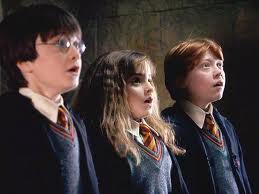
I have been meaning to write about Harry Potter for some time but I don't think I can do justice or that I have good enough words. Still I decided to give it a try. I read it for the first time many years ago, after having been a forced listener to the rants of one of my school friends who was a big fan of Harry Potter series. In those days, you could find Harry's face on literally everything including rulers, sharpeners, pens, pencils, handbags, diaries and what not. So I finally bought a copy and up till now, it has become extremely battered from excessive use.


On opening it for the first time, it is not the story but J. K. Rowling's style that caught my attention:


"Mr. and Mrs. Dursley, of number four, Privet Drive, were proud to say that they were perfectly normal, thank you very much. They were the last people you’d expect to be involved in anything strange or mysterious, because they just didn’t hold with such nonsense. Mr. Dursley was the director of a firm called Grunnings, which made drills. He was a big, beefy man with hardly any neck, although he did have a very large mustache. Mrs. Dursley was thin and blonde and had nearly twice the usual amount of neck, which came in very useful as she spent so much of her time craning over garden fences, spying on the neighbors. The Dursleys had a small son called Dudley and in their opinion there was no finer boy anywhere."

Could there be any better introduction of the bullying, nosy, obnoxious Dursleys!! These are some of my favorite lines from this book.


As I continued, I became somewhat lost! I mean, what is happening!! owls and fancily dressed people and this strange Dumbledore (who appears suddenly late at night) and McGonagall (who was impersonating a cat for the whole day sitting on a wall in Dursleys' street). Turns out there is some big cause for celebration that night. And Dursleys are about to be at the receiving end of a great surprise.

Ten years have passed since Dumbledore left Harry with the Dursleys. During this time, harry somehow made strange things (including setting a Boa constrictor free after actually chatting with it in a zoo)happen around him, which continued testing the "excessively normal" Dursleys' patience for 10 years.

So now it is harry's 11th birthday. Harry has never got a birthday cake and has spent his birthdays wondering what it would be like if his parents were there (who had supposedly died in a car crash: Dursleys' version of the story). But this time there is something special. On the day before his birthday, there are heaps of letters addressed to Harry which follow them everywhere when Mr. Dursleys tries to escape them while getting even madder than he already is. When they think they have managed to escape the letters, the sender of these letters Hagrid himself arrives with Harry's first ever birthday cake!


Now Harry is being told the truth of his identity (oh he is a wizard and a very popular one among thousands of others). What the hell was he doing with Dursleys who are so excessively Muggle (not a wizard)? Well, it turns out that Dursleys had lied about his parents death. Both of them were also wizards and had been killed by the darkest wizard of all times Voldemort (nobody but very few people in wizard's world dared speak or write or even spell his name). Harry being the only one who had defied Voldemort as a one-year-old was very famous in his world. So Hagrid tells him that there is this magic school Hogwarts, where Harry has got a place. Harry shops for his school, gets a wand and an owl (his first ever birthday gift) and finally leaves for Hogwarts on Hogwarts express.


And he reaches the great, prestigious Hogwarts, where he comes to feel at home!


At Hogwarts, life is totally different. He finds friends, Ron and Hermione, who are just as adventurous as Harry himself. He is both liked and hated. He meets his new teachers including formidable McGonagall, quivering Quirel, bitter and contemptuous Snape and the sleepy ghost Binns and learns to play Quiditch as a seeker (youngest in a century). Now, Harry and his friends have a knack of attracting trouble. When everybody is busy in studies and other normal school routine tasks, Harry, Ron and Hermione are intrigued by a three-headed dog (which they were not supposed to set eyes on in the first place). They don't even refrain from going into the forbidden forest (after Harry receives an invisibility cloak on Christmas) and badgering Hagrid with questions about the dog and what he was protecting. After some help from Hagrid's blunders, they discover that the dog was protecting the Philosopher's stone and they take it upon themselves to save the stone from Snape. Later it turns out that they were wrong about Snape. But Harry, in his very first year, comes face to face with Voldemort, who had been in hiding all these ten years and now is trying to come back.


Apart from the adventures, Harry learns the true meaning of friendship, of sticking together with friends and standing by each other, not to mention, making troubles together as well. He also makes enemies in the form of Malfoy, Crabbe and Goyle. 


So Harry's first year ends and I am tempted to read it again since I realized while writing this review that I cannot recall a lot.


Besides some lines from the book that I mentioned in the beginning, I also like Dumbledore's talk with Harry when he is at the hospital after his adventure:


“The truth.” Dumbledore sighed. “It is a beautiful and terrible thing, and should therefore be treated with great caution." 
"If there is one thing Voldemort cannot understand, it is love. He didn’t realize that love as powerful as your mother’s for you leaves its own mark. Not a scar, no visible sign … to have been loved so deeply, even though the person who loved us is gone, will give us some protection forever. It is in your very skin.."
I doubt I will ever say goodbye to Harry Potter. It is still fresh in my memory. It was my introduction to English fantasy and I still think about fantasy as something to do with Harry Potter. No novel has ever been even nearly harry potter-good. It really deserves the attention and world-wide fame that it got. Just to be clear, I am not a fan of Harry Potter movies. And that is not because they were any of the actors or directors fault. The plot of the actual stories is so rich that it is probably not possible to capture it in a 2 and 1/2 hour movie.

Thursday, 28 February 2013

The Naming Conundrum


How many people with similar names can you tolerate in a story??

Well, I get totally lost whenever I pick this book "One Hundred Years of Solitude" by Gabriel Garcia Marquez. Every time a character is mentioned, I have to stop for a minute to figure out who exactly he is and why he is doing whatever he is doing. Do you, my dear reader (if there's any), wonder why?? Because they all have same names. 
Its a story of many generations of the strangest of families living in a town called Macondo in "the world that was so recent that many things lacked names, and in order to indicate them it was necessary to point." So this family got hold of just two names Arcadio and Aureliano and let them suffice for generations to come. And the children came from so many various sources that it becomes really hard to keep track. Likewise, so many events keep occurring in such abrupt fashion in it that its mind-boggling to remember the sequence.

About the story: it is interesting and funny and strange. It's my first encounter with Magic Realism, a genre where magic elements are a natural part in an otherwise mundane, realistic environment. Things are just going the normal way, well as normal as this strange family can manage, and then suddenly things start flying, people come back from death, at one time, the whole town suffers from insomnia and when they have been awake for months or may be years and have started losing their memory, suddenly they come back to normal.

So I am still reading it, rather slowly. But honestly, I cannot make any sense of events and cannot tell whether the Arcadio and Aureliano being mentioned are son or grandson or great-grandson of the original Arcadio.

Saturday, 23 February 2013

The Spell Has Broken..

The Casual Vacancy by J K Rowling:


I finally managed to complete it!!!

My opinion of this novel is a blend of like and dislike or more appropriately annoyance, although I am less annoyed now than a few days ago. It took me almost two months to complete it or to be more accurate, it took me two months to read its first half. It is because of this novel that I have 5 books on my currently-reading list. In just could not stick to it and kept on finding something else to read. More than half of it is dull and tiresome. It falls into that category of books that I usually leave unfinished, but I just could not do it with Rowling. In the second half, however, things start to speed up and it moves towards such a disastrous and dramatic end that it changes every single character's life and to a large extent, my opinion as well.

The story is about a small town Pagford and its local politics. It is about petty problems of everyday  which do not sound a great deal to us but they actually define some people's entire life. It shows the result of prejudices and social negligence and of failing to understand the depth of the problems that remain eclipsed by seemingly more important ones.

The most interesting that I found in this book is the way that Rowling has gradually built her different characters that belong to common families from the same small town but are so different in their attitudes. It relates the events that follow the local Councillor Barry Fairbrother's sudden death and now at the end I realize that this death was the cause of so much change and that so much depended on one person.

The Mollisons whose entire life is gossip. They enjoy nothing more that pulling other people's legs. They are materialistic, jealous and prejudiced and feel so self-important that they are not even affected by the graveness of death. Rather they are just happy that it served their prejudice well. Their reaction to Fairbrother's death was that they had a news to tell people and to boast that they knew about it and others did not. They even enjoyed shocking the deceased friend with the news. They considered their dislike of Fields (which was another small town attached to Pagford for which Pagford council had to provide funds) more important than the many problems people would suffer if the two towns' association was broken. And this dislike was something based on a stupid history which really did not involve people who are living in the present. Even after the head of family and notoriously obese Howard Mollison experiences heart attack and is bed-ridden, his wife actually enjoys that she is getting all the attention.
Their first reaction to Fairbrother's death was to celebrate the fact that now they would be able to get rid of Fields, after Howard's son Miles Mollison will take the seat of the Councillor, something his wife is not happy about and they end up place their married life in jeopardy.

Then there are the Jawanda family and Wall family, who were friends and allies with Barry Fairbrother and intend to carry on his good work. Collin Wall, who is also the Headmaster of the local school, decides to participate in the election against Miles Mollison. But Collin Wall has a weak personality and he does not get along well with his adopted son Stuart Wall, who is literally the wild teenager who annoys his parents just for the fun of it.

It feels like half of the novel comprises of parents versus teenagers shouting match, that is painfully customary in Pagford and Fields.

The Jawanda family also have some difficult relationships at home. their youngest daughter Sukhvinder is constantly being compared to her overachieving siblings and she ends up having a habit of hurting herself. Though at last she manages to get the attention of her parents but the account of her life tells the consequences of the parent-children communication gap.

At this point I am realizing that Rowling somehow made it sound so funny. It did not feel like I was reading something that addressed some very serious issues.

Then there are Weedons. They are mostly treated as social outcasts. They are involved in drugs and are living an unruly life. They represent a class of people who are shunned by the society, which fails to understand the causes that shaped their lives and refuses to help them to recover. This family ends up in a catastrophic situation.

The life of the Price family is also interesting in another way. They include a short-tempered, abusing father, a frightened , indecisive mother and two boys with confidence problems.

Its great how Rowling has portrayed simple, common people to be so different for one another and how they cultivate a new generation with the traits that are a consequence of their own.

To sum up: character building was great, writing was good, some things like teenagers' unruly activities and adults' gossip habits were overdone and its end leaves an impact. So in short, worth reading (but don't expect to find any thrill).

Actually I now realize that there are so few books I have ever read talk about society in general. They are mostly about a few characters. They very rarely address different kinds of people and their lives in a social setup. So for me, it was a different type of book. And as I successfully completed it at last, I just want to believe that "All is well that ends well".

I hope J K Rowling keeps writing (children stuff I mean)!

Friday, 1 February 2013

Insurgent (Divergent # 2) by Veronica Roth

Once again a great demonstration of different people standing by a specific set of values. The subject fascinated me greatly in Divergent, in which the mostly described faction was Dauntless and probably Abnegation. It was even more interesting to meet with Candor and Amity and Erudite and the Factionless.

The book begins right where Divergent ended. Tris, Four and a couple of others running for their lives after having ended the simulation and finally put an end to the horrifying manslaughter masterminded by Erudite. They seek refuge in Amity headquarters. Amity, being the Peaceful offer them safe home. Meanwhile, Tris is having difficulty living with herself and Four with his father. At this point, Beatrice Prior of Insurgent sounds more and more like Katniss Everdeen of The Hunger Games. That is accounted for by the similarities in situations, not the similarities in the two stories, as some people point out. Tris had to kill one of her best friend from Dauntless in order to save herself so she could put an end to simulation, she being the only one 'awake' (not under simulation). Personally I think that idea of man-controlling is great. I don't know if its new or not but it fits perfectly in the story.

The book is slow and a little dragging in the beginning, for almost 100 pages but later it picks up pace.

Nobody but Erudite and only one living Abnegation leader Marcus, Four's father, knows the reason that drove Erudite to kill a whole faction. The Dauntless, after waking from simulation, the Attack Simulation as they call it, and finding themselves to having been used for murder, are divided into two groups now. Some have joined hands with Erudite, thus called Dauntless Traitors and others have sought refuge in Amity and Candor headquarters.

Its just fascinating how Amity places the need to keep peace above everything. They even mix a calming serum in their bread. They avoid fighting at all costs, even if it betrays reason.

The Amity headquarters are raided by Erudite and dauntless Traitors to find Tris and Four and once again they have to run for their lives. This time they end up with Candor.Here we find ourselves with the most straight-forward people, who cannot stay quiet about a single thing. Like Amity's calming drought,they have Truth Serum to get the truth out of anybody. Turns out that being the most open-mouthed does not make them useful at all and they are supposedly the expendable faction, because they do not produce anything that is required for sustenance. So now Erudite threatens Candor, which does the trick. The Candor Leader, being utterly unable to 'keep the truth caged' immediately declares that they are no longer supporting the refugees.

So now Tris and Four finds themselves with the Factionless and their crude life style.

The Dauntless return to their own headquarters to plan a strategy against Erudite, but Erudite are already a step ahead, as they had already injected most of them with a long-lasting simulation serum, which they now use to stage forced suicides of young Dauntless and unless they hand themselves the Divergent for experimenting, it would continue. Divergents are now commonly known, thanks to Truth Serum of Candor. So Beatrice hands herself to Erudite and was just about to be executed when she is rescued in a most astonishing way.

Tris realizes that she still wants to live, which she seemed to have forgotten due to her depression over being a murderer and having witnessed her parents deaths. She was being pretty reckless before that.

Now they join hands with the Factionless to destroy all the data that is Erudite's power and together they attack the Erudite. At this time, however, Tris works separately to recover a file that was left with Erudite leader. This file is supposed to be the reason for all the disaster and for Tris's parents' death.

Why the Divergent are so threatening to Erudite remains a mystery till the very end.

It continues to reveal how people holding for different values will make different choices. Erudite, who believe in cold logic see no reason for them to be forced to leave their well-established system of living. Abnegation, on the other hand, do not place their own system above anybody's life.

I have recounted a lot from the book, but by no means this tells the complete story. There is yet a lot to be discovered and it ends in such a way that makes you want to grab the next book right away. But we cannot get everything we want. We have to wait for months for the sequel to be released. I hope its publication is not delayed even further than that.